


Herbal Roots

Autumn’s Herbal Treasures: Echinacea, Dandelion, Burdock & More

Fall is Root Season!
As the air turns crisp and leaves begin to fall, plants are quietly preparing for winter. They move their nutrients and active compounds down into their root systems, storing strength for the cold months ahead. This physiological change makes fall the optimal harvest time for medicinal roots, when their therapeutic compounds are most abundant and potent. These root herbs provide the kind of deep, long-term support for digestion, immunity, and health that's particularly welcome as winter approaches. Let's look at a few roots that you may find supportive.

Echinacea Root (Echinacea purpurea, E. angustifolia)
Harvest: Fall of the 3rd–4th year, once the plant dies back
Taste & Properties: Pungent and slightly sweet with a distinct tongue-tingling effect from alkylamides. The leaves and flowers are more floral and less bitter than the roots, but function similarly as immune stimulants with antimicrobial properties. Both aerial parts and roots contain the characteristic acrid constituents that give echinacea its stimulating action. The roots, however, contain higher concentrations of alkylamides and echinacoside.
Actions:
Immunomodulatory
Anti-inflammatory
Antimicrobial
Antiseptic
Lymphatic stimulant (lymph mover)
Vulnerary (support and heal topical injuries)
While most people know echinacea for colds and flu, it is exceptional for infections, especially topical infections like boils, acne, skin abscesses, scrapes and wounds, tooth and gum infections. Use both internally and externally for best results.
Preparation & Use:
Tincture: 1-3 ml up to 4× daily
Decoction: 1 cup up to 2× daily
Topical: Use diluted tincture or cooled decoction as a wash for wounds, or make a warm compress soaked in decoction for skin infections
Yellow Dock Root (Rumex crispus)
Harvest: Late fall, 2–3-year-old roots after dormancy
Taste & Properties: Bitter, earthy, slightly astringent
Young leaves are edible but higher in oxalic acid; the root contains anthraquinones and tannins that enhance liver and digestive function.
Actions:
Alterative (blood cleanser)
Hepatic (liver support)
Mild laxative
Nutritive (iron and vitamin C-rich)
Cholagogue (stimulates bile flow)
Astringent
Lymphatic stimulant (lymph mover)
Yellow dock shines in sluggish digestive systems and stagnant liver conditions. By stimulating bile flow it improves fat digestion and relieves constipation. Its astringency helps tone loose bowels even as it gently moves the system. As an effective alterative, when taken as a tincture or decoction, yellow dock helps clear hot, inflamed skin conditions like acne, eczema, and psoriasis by improving digestion, liver function, and blood quality. Topically, infused oils, vinegars, or salves soothe itchy, irritated skin and minor eruptions.
Preparation & Use:
Decoction: 1/2 cup before meals up to 2× daily to stimulate digestion
Tincture: 0.5-2 ml up to 3× daily
Vinegar: use on salads to encourage iron absorption, or as a topical remedy for itchy spots such as bug bites
Salve: infuse yellow dock leaves and root into oil to create a salve to soothe irritated skin
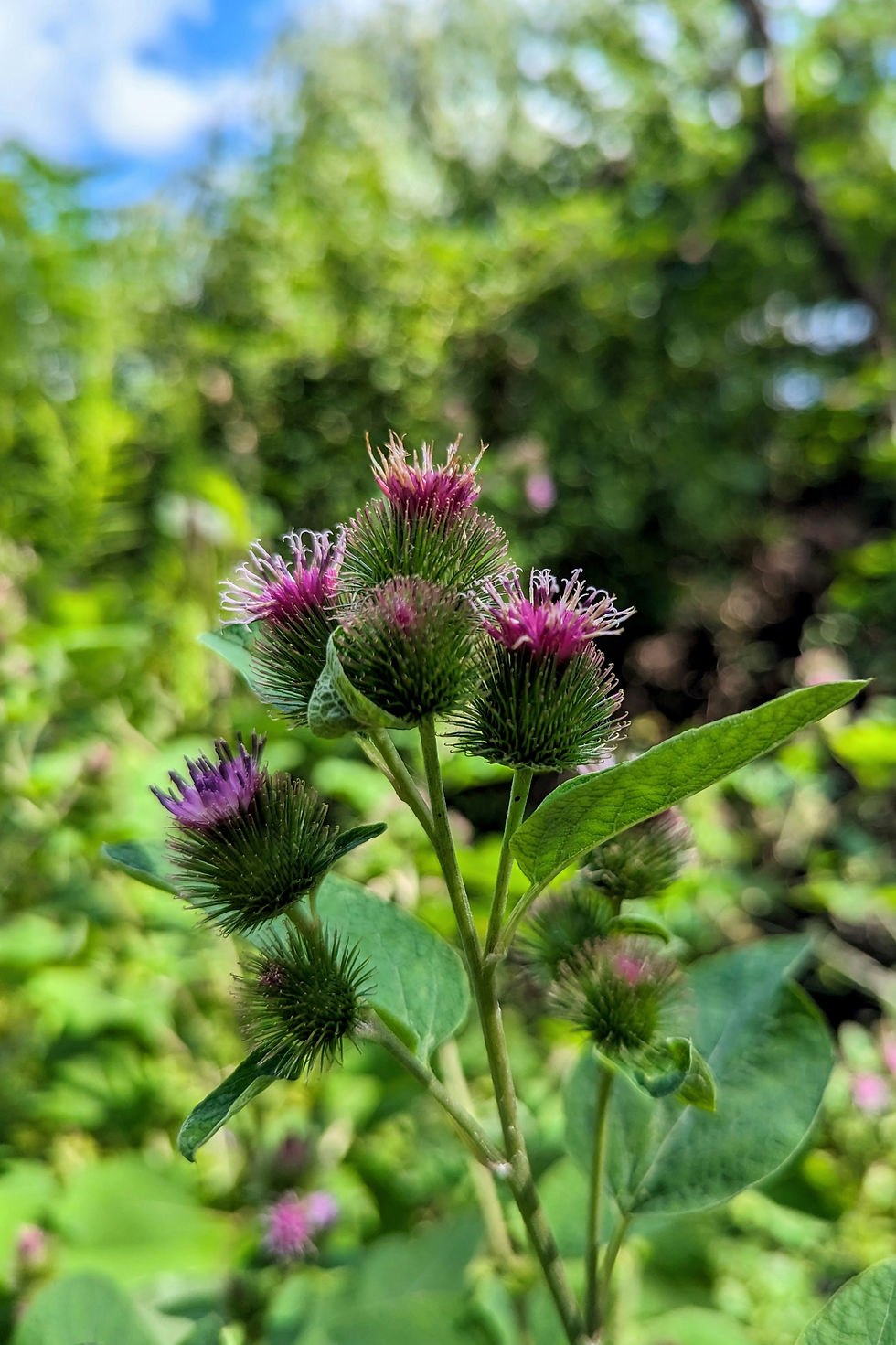
Burdock Root (Arctium lappa)
Harvest: Fall of the first year, before bolting in spring
Taste & Properties: Sweet, earthy, slightly bitter, mucilaginous
Leaves are more astringent and used mainly topically, while the root is used internally as a gentle, nourishing alterative.
Actions:
Alterative (blood cleanser)
Hepatic (liver support)
Lymphatic
Nutritive
Prebiotic (inulin-rich)
Mild diuretic
Burdock root supports detoxification by improving digestion, liver, and kidney function. It helps the body eliminate wastes through proper channels rather than forcing them out through the skin. This makes it exceptional for chronic skin conditions like eczema, psoriasis, acne, and boils—especially dry, scaly, or patchy skin problems. As a prebiotic, burdock root feeds beneficial gut bacteria, improving overall digestive health and nutrient absorption.
Preparation & Use:
Decoction: 1 cup up to 2x daily
Tincture: 1-3 ml up to 3× daily
Culinary: slice and cook like parsnips or carrots
Roasted root "coffee": blend with other roasted roots, cacao, and spices for a healthy, caffeine-free beverage

Dandelion Root (Taraxacum officinale)
Harvest: Fall roots are sweeter (higher in inulin)
Taste & Properties: Bitter, earthy, slightly sweet when roasted
The leaves are primarily diuretic and nutritive (high in potassium, vitamins A, C, and K). The root offers liver and digestive support through bitter compounds and has less diuretic action than the leaves. Fall roots are sweeter due to stored inulin; spring roots are more bitter.
Actions:
Cholagogue (stimulates bile flow)
Digestive stimulant
Hepatic
Mild laxative
Prebiotic (high in inulin)
Nutritive
Dandelion root is a classic bitter herb that supports liver function, stimulates bile production, and promotes healthy bile flow into the intestines. It’s valuable for sluggish digestion, poor fat metabolism, and mild constipation due to liver stagnation. Its bitterness stimulates saliva, stomach enzymes, and peristalsis, aiding complete digestion from start to finish. Dandelion is gentle enough for long-term use and an excellent daily tonic for those with chronic digestive sluggishness.
Preparation & Use:
Decoction: ½–1 cup before meals up to 2× daily
Tincture: 1-3 ml up to 3× daily
Roasted root “coffee”: blend with other roasted roots, cacao, and spices for a healthy, caffeine-free beverage
Vinegar: infuse in apple cider vinegar for mineral-rich salad dressings
Food: young roots can be cooked like other root vegetables
Marshmallow Root (Althaea officinalis)
Harvest: Fall of the second year
Taste & Properties: Sweet, bland, mucilaginous
Both leaves and flowers contain mucilage, but the root holds the highest concentration, making it deeply soothing for irritated tissues. The leaves have a greater affinity for the respiratory system, while the root is more specific to the digestive and urinary systems.
Actions:
Demulcent (soothing mucilage)
Emollient
Vulnerary (wound healing)
Anti-inflammatory for mucous membranes
Mild diuretic
Nutritive
Marshmallow root is rich in polysaccharides that become thick and viscous in water; it soothes and coats irritated mucous membranes throughout the body: skin, stomach, intestines, throat, lungs, and urinary tract. It's particularly important for people who drink water but quickly eliminate it; the mucilage helps water stay in the tissues. Marshmallow excels for inflamed digestive conditions, including heartburn, GERD, stomach ulcers, intestinal ulcers, and dry constipation. Topically, it can be used for burns and wounds due to its vulnerary and antimicrobial properties.
Preparation & Use:
Cold infusion (preserves mucilage): 2 Tbsp dried root per cup cold water, infuse overnight; drink 2–3 cups daily
Decoction: gentle simmer 10–15 minutes (max); heat reduces mucilage
Topical: use cooled infusion or decoction as a wash for wounds or irritated skin
Note: Take 2-3 hours away from medications (may inhibit or slow absorption)

Mullein Root (Verbascum thapsus)
Harvest: Fall of the first year (before the flowering stalk emerges in year 2)
Taste & Properties: Slightly bitter, earthy, mucilaginous
The leaves and flowers act mainly on the lungs, while the root supports structure and stability, addressing the spine, joints, and urinary system.
Actions:
Anodyne (pain-relieving)
Antispasmodic
Anti-inflammatory
Mild sedative nervine
Urinary tract support
Connective tissue support
Mullein root, when taken internally as an infusion or tincture, is supportive for back and joint discomfort, helping the body maintain healthy movement and flexibility. It supports the natural lubrication of joints and connective tissues, especially the lower back, and is often used for mild urinary incontinence, whether from childbirth, menopause, or aging.
Preparation & Use:
Decoction: 1 cup 2–3× daily
Tincture: 0.5-2 ml 3× daily
Harvesting & Storage Tips
Wait until after the first light frost, when plants have fully died back; this signals their energy has returned to the roots. Use a digging fork to loosen soil around each plant before gently lifting the root. Rinse lightly, scrub away soil, and chop while fresh (dried roots become very hard). Spread on drying screens in a warm, ventilated area away from direct sunlight until they snap cleanly. Store in airtight glass jars, away from heat and light. Properly dried roots stay potent for up to three years.
Decocting Roots
Because roots are dense and fibrous, a simple, quick hot-water infusion (the standard method for extracting beneficial compounds from delicate aerial parts) is not effective; roots require decocting.
To Make a Decoction:
To decoct roots, use one tablespoon of dried chopped root (or 2 Tbsp fresh) per cup of water. Combine with cold water in a small saucepan, bring to a boil, then reduce the heat and simmer, covered, for 20–30 minutes. The water should be reduced by 1/4 to 1/2 of the starting volume. Strain and drink warm, or refrigerate for up to two days.
Tincturing Roots
Roots may also be extracted with alcohol or vinegar. The folk method involves filling a clean jar halfway with chopped roots, topping off with alcohol or vinegar, and infusing for 3–6 weeks, shaking occasionally.
Fresh roots have higher moisture content than dried roots, so you will want to use a higher proof of alcohol, such as 50-70% ABV for dried and above 70% for fresh roots.
To Make a Standardized Tincture:
You will need to weigh the roots and measure the volume of the alcohol. For a 1:2 ratio (fresh root), weigh the roots by grams (or ounces) and then double that number to measure the volume of alcohol in ml (or ounces). For a 1:5 ratio (dried root), multiply the weight by 5 to find the needed volume of alcohol.
Herbal Root "Coffee"
2 parts roasted burdock root
2 parts roasted dandelion root
2 parts roasted chicory root
2 parts cacao or carob nibs
1 part cinnamon chips
To make a “coffee” stock blend, combine equal parts of your favorite roasted roots, such as burdock, dandelion, and chicory, along with roasted cacao or carob nibs and a bit of cinnamon chips. Place the mixture in a glass jar with a lid and shake to blend.
To brew, use about 1 to 1½ tablespoons of your root “coffee” blend per 1 cup of hot water. You can prepare it on the stovetop as a decoction (simmer gently for 10–15 minutes), or brew it using a French press or coffee maker. If using a French press, steep for at least 10 minutes before pressing and pouring.
Final Thoughts
These six roots form a solid foundation for home herbalism, addressing immune support, digestive health, liver function, inflammation, and structural wellness. Each can be prepared as a simple decoction or tincture and stored for use throughout the winter months when the body often needs extra support.


Comments